If you’re picking a bike helmet for kids, the most important thing isn’t the look or even the price — it’s fit, safety, comfort, and proper use. Here’s a practical guide to help you pick a good kids’ bike helmet, plus a few helmet examples you might consider if you shop online.
What to look for when selecting a kids’ bike helmet
• Safety certification and standards
- Choose a helmet that’s certified for biking safety. Many safety-authorities recommend helmets approved by Consumer Product Safety Commission (CPSC) or other recognized standards.
- Avoid hand-me-downs. A used helmet may have hidden cracks or damage that reduce its protective ability.
1. Bern Nino Bike Helmet for Kids

4.7 out of 5
With DVRT tech to cut down rotational impact and Zipmold+ foam for rock-solid protection, this helmet is certified safe, incredibly durable, and built to grow with your child. Families around the world trust the Nino DVRT for kids ages 5–8—where bold style meets patented innovation in a lightweight, low-profile design.
Effortless Comfort: Weighing only 305g, equipped with seven cooling vents, and featuring EZ-Fit Velcro adjustment, it stays secure, comfy, and pinch-free all day long.
2. Giro Scamp II Youth Bike Helmet

4.6 out of 5
The Roc Loc Jr. system uses a simple, durable dial-fit design shaped to follow the natural curvature of a child’s head. Developed through years of anatomical research, it ensures a secure, comfortable fit. A large rubberized dial makes adjustments easy for adults, so kids can get geared up and riding in no time.
3. Thousand Kids Helmet

4.6 out of 5
Say goodbye to pinched skin—our safety-tested magnetic fastener is quick, easy, and kid-friendly. The dial-fit system offers precise adjustments and lets the helmet grow with your child (ideal for 49–53 cm head circumferences). Stylish, lightweight, and finished with premium materials, this helmet delivers comfort and looks in one.
4. Triple Eight Lil 8 Kids Helmet

4.6 out of 5
Tough Where It Counts: A durable ABS outer shell paired with an EPS liner helps absorb impact and protect growing noggins.
Skater-Approved, Kid-Tested: The adjustable fit dial system creates a safe, snug fit, and two sets of washable Sweatsaver pads provide added comfort and customization.
Versatile Sizing: Designed for toddlers up to age 5 (18–20 in /
5. Joovy Noodle Multi-Sport Helmet, Kids

4.8 out of 5
The adjustable-fit dial lets this toddler and kids’ helmet grow with your child.
14 cooling vents help keep them comfortable even on hot days, while integrated bug mesh in the front vents keeps critters out as they ride.
A built-in visor offers extra eye protection on sunny days, and a pinch-guard chin strap ensures all-day comfort.
6. Retrospec Remi Kids Bike Helmet

4.8 out of 5
Stay cool with 11 well-positioned vents that maximize airflow and reduce heat buildup on hot days.
Protective Visor: Built-in coverage helps block sun and deflect debris for clearer, safer rides on bikes, scooters, or skates.
Comfort That Adapts: The ErgoKnob dial system and no-chafe straps ensure a perfectly tailored fit as kids grow, and a soft chin pad keeps every ride irritation-free.
7. Radio Flyer Helmet
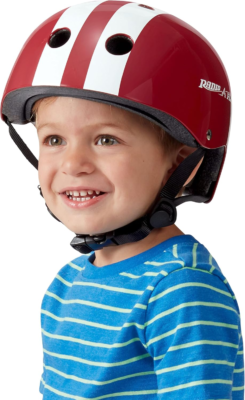
4.8 out of 5
Classic Helmet: Keep your toddler riding in style with this timeless design, made to fit head sizes from 48–54 cm.
Adjustable Size: The chin strap and interior padding adjust easily to provide a snug, secure fit as your child grows.
Safe for Kids: This helmet meets U.S. bicycle safety standards, and the simple, kid-friendly buckle keeps it safely in place.
What to Look For — and Why It Matters
- Safety standards & certification: Choose helmets that meet recognized safety standards (for example, helmets that have passed mandatory tests like the ones from U.S. Consumer Product Safety Commission (CPSC) or equivalent local/international standards).
- Proper fit: A helmet should sit level on the head, cover the forehead, and stay snug when the child shakes their head. Straps should form a “V” under the ears and be snug under the chin.
- Comfort & ventilation: Kids are more likely to wear a helmet if it’s comfortable. Lightweight designs, soft padding, and ventilation help especially in warm climates (like the Philippines).
- Age / head size: Helmets should match your child’s head circumference (often adjustable). Don’t pick a helmet they’ll “grow into” — it should fit properly now.
- Replacing and reuse: Helmets should be replaced after a serious crash or every few years, even if undamaged, because materials degrade over time