In a series of sweeping regulatory shifts targeting foreign tech hardware, the Federal Communications Commission (FCC) expanded its “Covered List”—the federal registry of equipment deemed an unacceptable threat to national security. What began as restrictions aimed at foreign telecommunications infrastructure has rapidly expanded directly into American living rooms, garages, and airspace.
Over the past year, the FCC placed foreign-produced Wi-Fi routers, uncrewed aerial vehicles (drones), and advanced mobile robotics (including autonomous vacuum cleaners and mowers) under stringent new authorization bans.
What Did the FCC Actually Ban?
Rather than blacklisting individual companies piecemeal, the FCC has shifted toward broad category-level restrictions on foreign-manufactured equipment that connects to radio frequencies and digital networks.
The current roster of affected consumer tech includes:
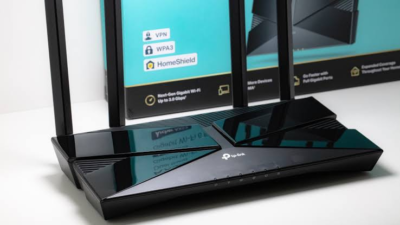
- Wi-Fi & Mesh Routers:In early 2026, the FCC added consumer-grade internet routers manufactured outside the United States to the Covered List, citing supply chain vulnerabilities and systemic cybersecurity risks in home networking hardware.
- Foreign Drones & LiDAR Sensors:Late last year, the FCC blocked radio frequency authorizations for new foreign-produced drones.Follow-up rules further targeted foreign drones equipped with LiDAR, optical cameras, and thermal imaging sensors, classifying certain mapping hardware under strict military-grade technology frameworks.
- Advanced Household Robots:In late July 2026, the agency prohibited new equipment authorizations for foreign-made autonomous mobile devices weighing over 4.4 pounds capable of independent navigation, obstacle avoidance, or ground locomotion.This covers smart robot vacuums, mop hybrids, pool cleaners, lawn mowers, and humanoid prototypes equipped with onboard cameras and micro-mapping tools.
Why Is the Government Taking This Action?
The core driving factor is cybersecurity and foreign data exposure. Modern smart devices are far more than simple appliances—they are mobile sensor arrays.
- Mapping and Optical Surveillance:Modern robot vacuums and drones use optical cameras, LiDAR, and spatial algorithms to create detailed 3D floor plans of private homes, commercial facilities, and neighborhoods.
- Network Gateways: Routers handle every packet of internet traffic passing through a home or business. Compromised router hardware or firmware can give unauthorized actors backdoors into local network traffic, connected smart devices, and private data streams.
- Supply Chain Risks: Federal authorities expressed concern that remote software updates or hardware backdoors in foreign-produced gear could allow widespread network disruption during geopolitical conflicts.
What Does This Mean for You?
If you already rely on a foreign-made Wi-Fi router, fly a popular consumer drone, or have a robot vacuum cleaning your floors, there is no need to panic or throw away your electronics.
| Question | What It Means for Consumers |
| Will my current gadgets stop working? | No. The FCC ruling strictly targets new product approvals. Devices and existing models that received FCC authorization prior to the bans remain fully legal to own, sell, buy, and operate. |
| Will my current router or vacuum keep getting updates? | Yes. The FCC granted extended transition windows and exemptions that allow manufacturers to issue critical security patches and software updates for previously approved hardware through at least 2029. |
| Will stores pull popular electronics from shelves? | No. Existing inventories and pre-approved model lines remain on retail shelves. Retailers are not required to recall or destroy stock. |
| How will this affect future technology releases? | Expect delays and potential price hikes. Next-generation device models seeking new market entries must either move manufacturing out of restricted foreign regions, apply for conditional federal waivers, or construct fully U.S.-compliant supply chains. |
How Are Tech Brands Adapting?
The electronics industry is actively adjusting to meet these regulations. American brands that traditionally outsourced assembly to overseas facilities are shifting production lines to domestic plants or allied partner nations. Meanwhile, major consumer tech brands are applying for conditional approvals from the Department of Homeland Security and relevant agencies to prove their hardware and cloud infrastructure meet stringent U.S. cybersecurity benchmarks.
While consumer choices for upcoming 2027 hardware generations may experience short-term friction, the overarching goal of these rules is to establish higher baseline security standards for the hardware powering everyday connected lives.