5 Best Hemorrhoid Ointments (Buying Guide & FAQs)
This article is for general information only and isn’t a substitute for medical advice. If you’re unsure whether your symptoms are hemorrhoids, or if they’re severe or persistent, talk to a doctor or pharmacist before starting treatment — see the “When to See a Doctor” section below.
Hemorrhoid ointments are one of the most common first-line treatments for the itching, burning, swelling, and discomfort that come with hemorrhoid flare-ups. Most drugstore options fall into a few categories based on their active ingredient — numbing agents, swelling-reducers, anti-itch ingredients, or simple skin protectants — and the “best” one really depends on which symptom bothers you most. Below are five widely available options, followed by a buying guide and FAQs to help you choose.
1. Preparation H Ointment (Original, with Phenylephrine)
4.7 out of 5 ratings
Best for reducing swelling
Preparation H is the most recognized hemorrhoid brand in the U.S., and its original ointment formula uses phenylephrine, a vasoconstrictor that temporarily narrows blood vessels to shrink swollen hemorrhoidal tissue. The oil-based (petrolatum) formula also acts as a protectant, forming a barrier that reduces friction during bowel movements.
- Active ingredient: phenylephrine HCl (vasoconstrictor) + petrolatum/mineral oil (protectants)
- Best for: swelling and general irritation
- Format: oil-based ointment, long-lasting
- Note: doesn’t contain a numbing agent, so it won’t do much for sharp pain
2. Preparation H Hydrocortisone Cream/Ointment
4.7 out of 5 ratings
Best for itching
Preparation H also makes a version built around 1% hydrocortisone, a mild corticosteroid that reduces inflammation and is particularly effective against itching. It’s a good option when itching, rather than pain or visible swelling, is the main symptom.
- Active ingredient: hydrocortisone 1%
- Best for: itching and inflammation
- Format: cream or ointment
- Note: labels typically advise against use for more than 7 days without talking to a doctor, since prolonged use of topical steroids can thin the skin
3. Doctor Butler’s Hemorrhoid & Fissure Ointment
4.7 out of 5 ratings
Best multi-symptom formula
This ointment combines lidocaine (a numbing agent) with phenylephrine (a vasoconstrictor), plus soothing ingredients like aloe vera. Combining two active ingredients means it addresses both pain and swelling at once rather than just one symptom, which is part of why it’s a popular pick for people dealing with both a hemorrhoid and an anal fissure.
- Active ingredients: lidocaine + phenylephrine HCl
- Best for: combined pain and swelling relief
- Format: ointment with an applicator tip for internal use
- Note: contains natural/soothing additives (aloe, tea tree oil in some versions) alongside the active drug ingredients
4. Tucks Hemorrhoidal Ointment
4.6 out of 5 ratings
Best gentle, everyday option
Tucks is best known for its witch hazel pads, but its ointment line is built around simple protectant ingredients that soothe irritated skin and create a barrier without a strong numbing or steroid effect. It’s a mild option that some people prefer for daily use or for more sensitive skin.
- Active ingredients: typically a skin protectant base (varies by product)
- Best for: mild irritation, sensitive skin, or use alongside witch hazel pads/wipes
- Format: ointment, often paired with the brand’s medicated wipes
- Note: less potent than lidocaine or hydrocortisone options, better for mild symptoms
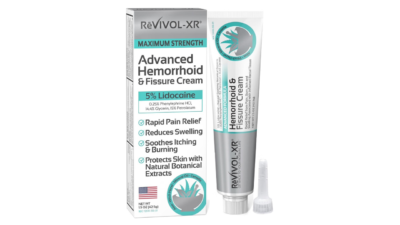
5. REVIVOL-XR Hemorrhoid Relief Cream/Spray
4.6 out of 5 ratings
Best for fast numbing and touch-free application
REVIVOL-XR’s formula centers on 5% lidocaine — the maximum strength available without a prescription — for fast numbing of pain, burning, and itching. It’s also available in a spray format, which some people prefer for a touch-free application to a sensitive area.
- Active ingredient: lidocaine 5% (maximum OTC strength)
- Best for: sharp or acute pain relief
- Format: cream or spray
- Note: because it’s a strong local anesthetic, follow label directions on frequency and duration closely
Buying Guide: How to Choose a Hemorrhoid Ointment
1. Match the ingredient to your main symptom
- Sharp pain or burning: look for lidocaine (numbing agent); 5% is the maximum OTC strength.
- Swelling: look for phenylephrine (vasoconstrictor), which shrinks swollen tissue over a few days.
- Itching: hydrocortisone (a mild steroid) is the most effective OTC option, but isn’t meant for long-term daily use.
- General irritation/friction: a plain protectant ointment (petrolatum, cocoa butter, glycerin) creates a barrier and helps healing without a “medicated” active ingredient.
2. Ointment vs. cream vs. spray Ointments are oil-based and form a long-lasting barrier, which is why many people prefer them overnight. Creams absorb faster and feel less greasy, which some prefer for daytime use. Sprays offer touch-free application, useful for sensitive areas or when applying by hand is uncomfortable.
3. Check for a combination formula if you have more than one symptom Products combining a numbing agent (lidocaine) with a vasoconstrictor (phenylephrine) address both pain and swelling at once, rather than requiring two separate products layered together.
4. Don’t stack products with the same active ingredient Using two different products that both contain hydrocortisone, or both contain lidocaine, can push you over the recommended dose without you realizing it. Check the Drug Facts label on each product before combining.
5. Follow duration limits on the label Hydrocortisone products typically shouldn’t be used for more than 7 days without medical advice, because prolonged use can thin skin. Most OTC hemorrhoid treatments in general aren’t intended for continuous long-term use — if symptoms aren’t improving within a week or two, that’s a signal to check in with a doctor rather than keep self-treating.
6. Internal vs. external application If you have internal hemorrhoids, look for a product that includes an applicator tip designed for internal use, and follow the label instructions — not all ointments are labeled for internal application.
FAQs
How quickly do hemorrhoid ointments work? Numbing ingredients like lidocaine typically work within minutes. Swelling-reducing ingredients like phenylephrine usually take one to three days of consistent use to visibly reduce swelling. Protectant-only ointments work more gradually by reducing friction and irritation over time.
What’s the difference between a hemorrhoid cream and an ointment? Ointments are oil-based (often petrolatum-based), forming a thicker, longer-lasting barrier — many people prefer them at night. Creams are lighter and absorb faster, which some prefer for daytime use since they feel less greasy.
Can I use a hemorrhoid ointment for more than a week? It depends on the ingredient. Plain protectant ointments are generally fine for ongoing use, but hydrocortisone-based products are typically labeled for short-term use (around 7 days) unless a doctor advises otherwise, since prolonged steroid use can thin skin. Always check the specific product’s Drug Facts label.
Is it safe to combine two different hemorrhoid products? It can be, but check the active ingredients first. Avoid combining two products that share the same active ingredient (e.g., two hydrocortisone products), as this can lead to using more than the recommended dose. Combining, for example, a witch hazel pad with a separate ointment is generally fine since they don’t overlap on active drug ingredients.
When should I see a doctor instead of self-treating? Talk to a doctor if you experience: rectal bleeding (especially if it’s more than very light spotting), severe or sudden pain, a hard and painful lump near the anus, symptoms that don’t improve after about a week of OTC treatment, or recurring hemorrhoids. Don’t assume bleeding is automatically from a hemorrhoid — it’s worth having it checked, since other conditions can cause similar symptoms.
Do natural ingredients like witch hazel or aloe actually help? Witch hazel is a mild astringent that many people find soothing, and aloe vera is commonly included for its calming, moisturizing properties. They’re generally considered gentle, low-risk additions, though they typically play a supporting role alongside (rather than instead of) an active ingredient like lidocaine, phenylephrine, or hydrocortisone for symptom relief.
Are hemorrhoid ointments safe during pregnancy? Many OTC hemorrhoid products are commonly used during pregnancy, but you should check with your doctor or OB-GYN before using any new product, since recommendations can vary by ingredient and trimester.
Can diet and lifestyle changes reduce the need for ointment? Yes — increasing fiber intake, drinking more water, and avoiding straining during bowel movements are commonly recommended alongside topical treatment, since they address some of the underlying causes (like constipation and straining) rather than just the symptoms.