The 5 Best GPS Trackers for Kids (Top Picks)
Whether your child is walking to school for the first time or you want extra peace of mind at a crowded theme park, GPS technology has evolved significantly. By 2026, trackers have become smaller, more accurate, and more specialized.
Here are the top 5 GPS trackers for kids based on reliability, features, and ease of use.
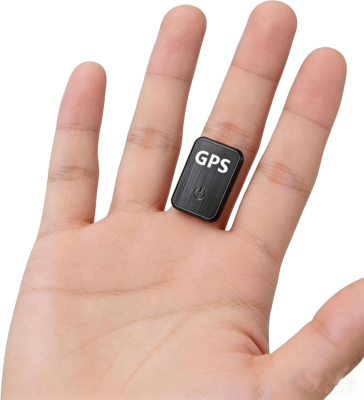
1. Best Overall: Generic 0.8-inch Mini GPS Tracker
4.6 out of 5 ratings
Generic 0.8 inch!Hidden Mini GPS Tracker for Vehicles Portable Real Time Magnetic Tracking Device Car Full Global Coverage Location Kids Dogs Trucks Person No Subscription Required Monthly Fee (1, Small mini)
Key Features
- Ultra-Compact: Roughly 0.8 to 1.5 inches; easy to hide in a glove box, seat pocket, or backpack.
- Magnetic Base: Built-in magnets allow it to snap onto any flat metal surface (like a car frame).
- No Subscription (with a catch): There is no monthly fee to the manufacturer, but you must provide your own SIM card and pay a mobile carrier for data/SMS.
- Audio Monitoring: Many versions allow you to call the device’s phone number to listen to the surrounding environment silently.
2. Best for Safety & Special Needs: AngelSense
4.1 out of 5 ratings
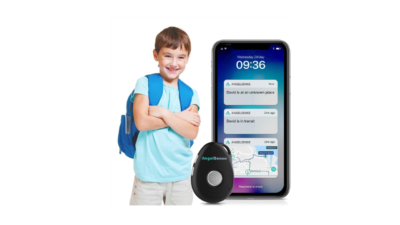
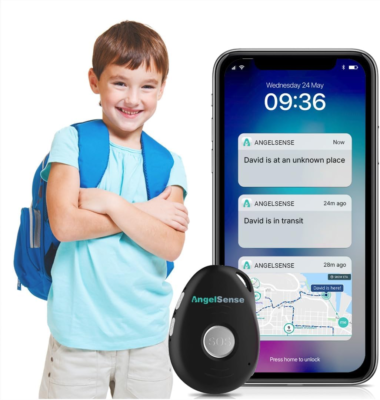
AngelSense is designed with maximum safety in mind, making it a favorite for parents of children with sensory sensitivities or those who may wander.
- Standout Feature: It offers non-removable wearing options (using specialized pins) so the device stays on the child. It also features an “Auto-Answer” speakerphone, allowing you to speak to your child even if they can’t physically press a button to answer.
- Continuous Monitoring: Provides a live timeline of the child’s day, including transit speed and exact routes.
- Best for: Children who need extra supervision or have a tendency to remove their belongings.
3. Best Smartwatch: Verizon Gizmo Watch 3
4.6 out of 5 ratings
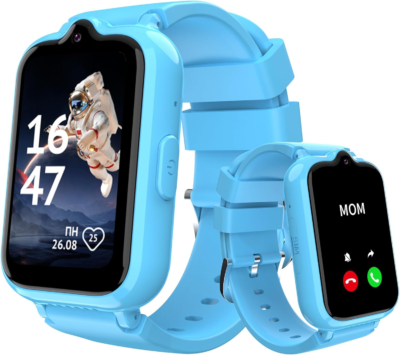
If you want a balance between a communication tool and a tracker, the Gizmo Watch 3 is the most reliable “starter” smartwatch.
- Key Features: It limits communication to a “whitelist” of up to 20 parent-approved contacts. It includes real-time GPS tracking and geofencing alerts.
- Modern Perks: Features video calling and a “School Mode” that silences all features except the SOS button during class hours.
- Best for: School-aged kids (5–10) who are ready for basic communication but aren’t ready for a full smartphone.
4. Best for Active Kids: Garmin Bounce
4.6 out of 5 ratings
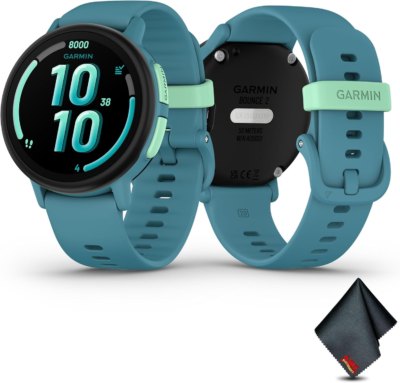
Garmin brought its world-class GPS expertise to the kids’ market with the Bounce, focusing on durability and fitness.
- Built to Last: It is highly water-resistant and rugged enough for sports and playground roughhousing.
- Communication: Uses LTE connectivity (subscription required) for two-way text and voice messaging directly through the Garmin Jr. app.
- Best for: Kids who are constantly outdoors, swimming, or playing sports.
5. Best Budget/Ecosystem Pick: Apple AirTag
4.6 out of 5 ratings
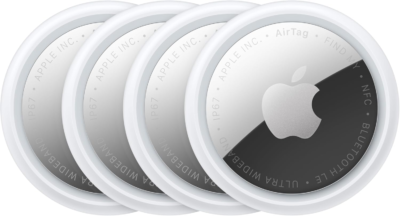
While not a “true” GPS tracker in the sense that it doesn’t have its own cellular connection, the AirTag is a powerful, low-cost alternative for families already in the Apple ecosystem.
- How it Works: It leverages the hundreds of millions of Apple devices in the “Find My” network to update its location.
- Pros & Cons: There are no monthly subscription fees, and the battery lasts a full year. However, it is less effective in remote areas with few iPhones and does not have an SOS button.
- Best for: Older children in urban areas or as a backup tracker hidden in a backpack.
Comparison at a Glance
| Device | Type | Battery Life | Key Benefit |
| Jiobit Gen 3 | Clip-on | 10 Days | Most discreet & accurate |
| AngelSense | Wearable | 24 Hours | High-security & non-removable |
| Gizmo Watch 3 | Smartwatch | 2-3 Days | Best communication features |
| Garmin Bounce | Smartwatch | 2 Days | Rugged & fitness-focused |
| Apple AirTag | Tag | 1 Year | No monthly fees |
A Quick Tip for Parents: When choosing a tracker, always check the monthly subscription cost. Most dedicated GPS devices (except the AirTag) require a monthly service plan to access cellular networks for real-time updates.
How old is the child you are looking to track? Knowing their age can help narrow down if a wearable watch or a hidden clip-on is the better choice.
Everything You Need to Know About GPS Trackers for Kids
GPS trackers for kids can give parents peace of mind by showing a child’s approximate location, sending alerts when they leave a designated area, and—on some devices—providing calling or SOS features. But they also create a sensitive stream of information: where a child is, where they go, and potentially when they are there. That makes privacy and security just as important as tracking accuracy.
What is a GPS tracker for kids?
A kids’ GPS tracker is a small wearable or device that uses GPS and usually cellular networks to determine and transmit a child’s location to an authorized adult’s phone or app.
Depending on the model, it may offer:
- Real-time or periodic location tracking
- Geofencing — alerts when a child enters or leaves a predefined area
- SOS/emergency button
- Two-way calling or messaging
- Location history
- Low-battery alerts
- School mode, which limits notifications or interactions during class
- Multiple caregiver accounts
- Sometimes additional smartwatch features
Some products are dedicated trackers, while others are children’s smartwatches with GPS and cellular connectivity. Current buying guides commonly emphasize SOS, geofencing, two-way communication, location accuracy, and battery life when comparing these devices.
GPS tracker vs. Bluetooth tracker
This distinction is important.
GPS/cellular trackers are designed for longer-distance location monitoring. A device can communicate its location through a cellular network, so a parent doesn’t necessarily need to be nearby.
Bluetooth trackers are primarily designed to help locate objects within Bluetooth-related networks or nearby-device ecosystems. They aren’t a direct substitute for a dedicated cellular GPS tracker when the goal is continuous monitoring of a child’s whereabouts.
If your main concern is “Where is my child when they’re away from me?”, look for a device with GPS + cellular connectivity, rather than simply a Bluetooth tag.
Features worth paying for
1. Accurate location
GPS accuracy varies with the environment. Buildings, dense urban areas, trees, and poor cellular coverage can affect performance.
Don’t assume that a map pin means the tracker knows the child’s exact position. Treat it as location information with some degree of uncertainty.
2. Geofencing
This is one of the most useful features for everyday situations.
You might create zones such as:
- Home
- School
- A relative’s house
- A regular activity location
The app can then notify you when the tracker crosses the zone’s boundary.
3. SOS button
An easily accessible physical SOS button can be more useful than complicated menus during an emergency.
Check exactly what happens when it is pressed. For example, does it call a parent, send an alert, share the child’s location, or contact a monitoring service?
4. Two-way communication
Some trackers let approved contacts call or message the child.
This can make a tracker more useful than a location-only device—but it also means there is additional personal data and communication to protect.
5. Battery life
A sophisticated tracker isn’t very useful if the battery dies halfway through the day.
Look at:
- Typical battery life
- Charging time
- Low-battery notifications
- Whether GPS tracking frequency affects battery life
- Whether the child can realistically remember to charge it
6. School-friendly controls
Some schools prohibit phones and connected wearables. A tracker with a school mode may reduce distractions while retaining essential safety functionality.
Always check the school’s rules before buying one.
The biggest issue: privacy
A child’s location is sensitive personal information.
In the U.S., the FTC specifically treats sufficiently precise geolocation as children’s personal information under COPPA. Covered services directed at children under 13 generally have obligations concerning parental notice and consent, access, deletion, security, and data retention.
The FTC has also previously warned companies marketing children’s GPS devices about collecting children’s geolocation data.
If you’re in the Philippines, privacy considerations are also important. The National Privacy Commission says personal information should be collected lawfully and, where required, with appropriate knowledge and consent; consent should be specific, informed, freely given, and not obtained through manipulative design.
Before buying, check the company’s privacy policy
Look for answers to questions such as:
- What location data is collected?
- How frequently is it collected?
- How long is location history retained?
- Is the data encrypted?
- Who can access it?
- Is it shared with third parties?
- Is it used for advertising?
- Can parents delete the data?
- Can the account use multifactor authentication?
- What happens if the company discontinues the service?
A recent Consumer Reports assessment also highlighted concerns with some child-focused trackers, including weak authentication and insufficient protection for communications, while recommending strong privacy controls and multifactor authentication where available.
Don’t secretly track your child
Technology works best when it supports a family safety plan rather than becoming invisible surveillance.
Explain to the child:
- What the device does
- When you’re checking their location
- Who can see the information
- What the SOS button does
- What happens if the tracker is lost
- Why location information needs to be protected
This also helps the child understand that location data isn’t something to share casually with other people.
How to choose the right tracker
Start with the problem you’re trying to solve, rather than the device with the longest feature list.
| Your main need | Look for |
|---|---|
| Child walks to school | GPS + cellular + geofencing |
| Emergency communication | SOS + two-way calling |
| Younger child without a phone | Simple GPS watch/tracker |
| Occasional location checking | GPS + good battery life |
| Keeping track of a nearby item | Bluetooth tracker |
| Several caregivers | Multiple authorized accounts |
| Privacy-conscious family | Minimal data collection + strong security |
A simple buying checklist
Before purchasing, verify:
- GPS and cellular coverage work in your area
- Location accuracy is acceptable
- Battery lasts through your child’s normal day
- Geofencing works the way you expect
- SOS functionality is clearly explained
- Only approved adults can access the account
- Multifactor authentication is available if possible
- The privacy policy explains location-data collection
- You understand how long location history is retained
- You know how to delete the child’s data
- The device complies with your child’s school rules
- Your child understands how and why the tracker is being used
Bottom line
A GPS tracker can be a useful safety tool, particularly for children who travel independently or aren’t ready for a full smartphone. But the best tracker isn’t necessarily the one with the most features.
Prioritize reliable connectivity, useful emergency features, battery life, strong account security, limited data collection, and transparent privacy practices. Most importantly, combine the technology with an age-appropriate conversation about safety and privacy.
And remember: a tracker doesn’t make a child safe by itself. It gives parents another source of information; it doesn’t replace supervision, communication, or an agreed family emergency plan.
Frequently Asked Questions (FAQs) About GPS Trackers for Kids
GPS trackers for kids can help parents know a child’s approximate or real-time location, set up safe-zone alerts, and sometimes communicate with the child. However, features, accuracy, costs, and privacy protections vary significantly between devices.
1. What is a GPS tracker for kids?
A GPS tracker for kids is a small wearable or portable device that uses GPS and usually cellular networks to determine and transmit a child’s location to a parent or guardian through an app.
Depending on the model, it may also include features such as:
- Location history
- Geofencing or “safe zone” alerts
- SOS/emergency buttons
- Two-way calling or messaging
- Low-battery notifications
- School or scheduled location modes
2. How accurate are kids’ GPS trackers?
Accuracy varies depending on the device, GPS reception, cellular coverage, buildings, weather, and surroundings. A tracker generally provides a useful location estimate rather than guaranteeing an exact position at every moment.
GPS may work particularly well outdoors, while locations can become less precise indoors or in areas with poor signal.
3. Do GPS trackers for kids require a phone plan?
Many dedicated GPS trackers require cellular connectivity, which usually means a subscription or SIM/mobile-data plan. Others rely on a paired smartphone or nearby Bluetooth connection.
Before buying, check:
- Whether a monthly subscription is required
- Which cellular networks are supported
- Whether the device works in your country
- What happens when cellular coverage is unavailable
- Whether international roaming is supported
4. Can I create a safe zone for my child?
Many GPS trackers support geofencing. You can designate an area—such as home, school, or a relative’s house—and receive an alert when the tracker enters or leaves that area.
This can be particularly useful for children who regularly travel independently.
5. Can my child contact me with a GPS tracker?
Some trackers include an SOS button, two-way calling, or limited messaging. Others only provide location information.
If communication is important, look specifically for a device that supports two-way communication, rather than assuming every GPS tracker has that capability.
6. Can GPS trackers replace a smartphone?
Not necessarily. A tracker can be a useful middle ground for families that want location and emergency communication without giving a child unrestricted access to apps, web browsing, and social media.
Some kid-focused devices deliberately limit contacts and other functions. The right choice depends on the child’s age, maturity, and what your family needs.
7. Do GPS trackers work everywhere?
No. GPS positioning and cellular communication have different limitations. A tracker may determine its position but be unable to transmit that information if it cannot connect to an appropriate cellular or Wi-Fi network.
Before purchasing, verify network compatibility and coverage where your child normally spends time.
8. Do GPS trackers work indoors?
They can, but indoor positioning may be less accurate than outdoor GPS. Some devices supplement GPS with cellular, Wi-Fi, or other positioning technologies to improve location estimates.
For this reason, it is better to think of a tracker as providing location information with varying accuracy, rather than guaranteeing a precise indoor position.
9. How long does the battery last?
Battery life depends on the model and how frequently it sends location updates. Frequent or continuous tracking generally consumes more power than occasional location checks.
Consider choosing a device that provides low-battery warnings and establish a routine for charging it.
10. Are GPS trackers safe for children?
The physical device is generally intended to be worn or carried by children, but digital privacy and security are important considerations.
A tracker can collect highly sensitive information about where a child goes. The FTC specifically considers precise geolocation information to be personal information under COPPA when it can identify a street and city or town. FFederal Trade Commission
Before purchasing, review:
- What location information the company collects
- How long it retains location history
- Who can access the information
- Whether information is shared with third parties
- Whether parents can delete their child’s data
- What security measures protect the account and device
11. Can someone else track my child through the device?
Potentially, if an account, device, or associated app is compromised or improperly configured. That’s why account security matters.
Use strong, unique passwords, enable multifactor authentication when available, restrict access to trusted caregivers, and keep the tracker and companion app updated.
The FTC recommends paying attention to how children’s connected devices collect, store, share, and secure personal information.
12. Should parents tell children that they are being tracked?
In most families, an open conversation is preferable to secret monitoring. Explain why the tracker is being used, who can see the location, and when location information will be checked.
The FTC similarly recommends talking with children about when location sharing is appropriate and reminding them not to broadcast their location publicly.
13. What features should I look for?
For a basic child-safety tracker, prioritize:
- Reliable location tracking
- Geofencing/safe-zone alerts
- SOS functionality
- Good battery life
- Compatible cellular coverage
- A well-designed parent app
- Strong account security
- Clear privacy and data-retention policies
- A subscription cost that fits your budget
Two-way communication can be valuable if you want the tracker to double as a simple communication device.
14. GPS tracker vs. Bluetooth tracker: What is the difference?
A GPS/cellular tracker is generally designed for longer-range location tracking and can transmit its location over cellular networks.
A Bluetooth tracker is generally better suited to finding nearby objects and can be useful in short-range situations, such as locating belongings in a crowded environment. It typically doesn’t provide the same combination of continuous location tracking, communication, and emergency features as a dedicated kids’ GPS tracker.
15. Are kids’ GPS trackers covered by privacy laws?
Privacy requirements depend on the country and the particular service. In the United States, COPPA can apply to online services directed toward children under 13 that collect personal information. The FTC explicitly identifies qualifying geolocation information as personal information under the rule.
Parents should therefore read the manufacturer’s privacy policy rather than assuming that a product labeled “for kids” automatically provides strong privacy protections.
16. What is the biggest mistake parents make when buying one?
A common mistake is focusing only on tracking accuracy or price while overlooking the service behind the device.
A good tracker should be evaluated as both a physical product and a connected service. Check its cellular compatibility, subscription requirements, app quality, privacy practices, security features, battery life, and emergency functions before making a decision.
Bottom line: A GPS tracker can be a useful safety tool, but it should complement—not replace—age-appropriate supervision and communication. The best device is one that provides the features your family actually needs while collecting and exposing as little personal information as reasonably possible.