5 Best GPS Antennas of 2026: Reviews, Buying Guide & FAQs
A quality GPS antenna can transform weak or intermittent satellite locks into fast, reliable positioning for vehicle navigation, trackers, IoT devices, marine systems, dash cams, or surveying. Most consumer and light-commercial units are active (with a built-in low-noise amplifier) L1-band patch antennas in a waterproof puck form factor. Higher-end options add multi-constellation/multi-band support or specialized mounting.
Here are five strong performers based on consistent reviews, specs, and real-world feedback, plus a practical buying guide and FAQs.
Buying Guide: How to Choose a GPS Antenna
Active vs. Passive
Active antennas include an LNA (typically 26–30+ dB gain) that amplifies the weak satellite signal and compensates for cable loss. They require DC bias power (usually 3–5 V) supplied by the receiver over the coax. Choose active for any cable run longer than a few feet, vehicle exteriors, or obstructed environments. Passive antennas lack an amplifier and work only with very short cables near the receiver.
Frequency Bands & Constellations
Basic antennas cover GPS L1 (1575.42 MHz). Better options support multi-GNSS (GPS + GLONASS + Galileo + BeiDou) on L1 for more satellites and faster fixes. Dual- or multi-band (L1/L2/L5) antennas are needed for high-precision RTK/survey work to correct ionospheric errors.
Key Specs to Check
- LNA gain and noise figure (lower noise is better)
- Connector (SMA Male is most common; also Fakra, GT5, MCX/u.FL, TNC)
- Cable length and type (RG174 is typical; longer runs need lower-loss cable or higher gain)
- Polarization (RHCP is standard)
- Impedance (50 ohms)
- Mounting (magnetic, adhesive, through-hole/screw, pole) and ground plane requirements
- Weather rating (IP67 preferred for outdoor/vehicle use) and temperature range
Mounting & Placement
Mount with a clear sky view, preferably on a metal surface for ground plane. Avoid roof racks, metal canopies, or deep vehicle interiors without a clear path. Magnetic mounts are convenient for temporary or rental vehicles; through-hole is more secure and vandal-resistant for permanent installs.
Other Considerations
Match bias voltage to your receiver. Confirm connector polarity and gender. For precision work, prioritize phase-center stability and multipath rejection. Budget consumer pucks cost $10–30; professional survey antennas cost significantly more.
1. Bingfu Vehicle Waterproof Active GPS Antenna (Best Overall / Best Value)
4.7 out of 5 ratings
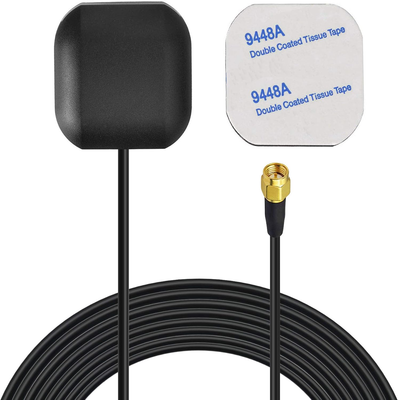
Bingfu Vehicle Waterproof Active GPS Antenna, This popular magnetic/adhesive puck is a frequent top recommendation for cars, trucks, boats, trackers, and IoT. It delivers solid 28 dB LNA gain on GPS L1 (1575.42 MHz ±3 MHz), runs on 3–5 V, and includes a 3 m RG174 cable with SMA Male connector. Waterproof housing, RHCP polarization, and dual magnetic + adhesive mounting make it versatile and easy to install.
Pros: Excellent price-to-performance, reliable urban reception, wide compatibility, simple install.
Cons: Single-band L1 focus (some variants add BeiDou); basic filtering compared to premium units.
Best for: Aftermarket head units, vehicle trackers, marine, general outdoor use. Highly rated across thousands of reviews.
2. Proxicast ANT-190-010 Active GPS Puck (Best Permanent / Professional Mount)
4.8 out of 5 ratings
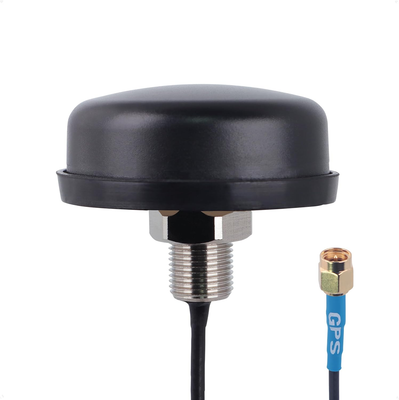
Proxicast Active/Passive SMA GPS Antenna – Through Hole Mount – 3 ft Coax A low-profile through-hole screw-mount antenna designed for fleet, AVL, and permanent installations. It features a narrowband L1 filter, 28 ±4.5 dB LNA gain, IP67 rating, and a short (~3 ft) low-loss cable with SMA Male. The design hides the cable and resists vandalism—no exposed elements once installed. Passive gain is solid (~5 dBic at zenith).
Pros: Superior filtering and signal integrity, weatherproof, secure permanent mount, clean installation.
Cons: Requires drilling a ~0.5-inch hole; shorter stock cable may need extension.
Best for: Fleet vehicles, industrial gateways, boats/RVs, any long-term outdoor install where reliability matters most.
3. AEDIKO GPS Navigation Antenna (Best Budget Performer)
4.7 out of 5 ratings
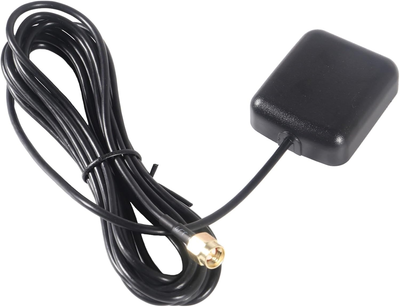
AEDIKO GPS Navigation Antenna with SMA Male Connector Vehicle Waterproof Active GPS Antenna for Car Stereo Head Unit GPS Navigation System Module Truck Marine Boat GPS Tracker. Very similar to the Bingfu in form and function: active 28 dB LNA, GPS L1, 3 m cable, SMA Male, magnetic/adhesive mount, and waterproof design. Reviewers praise its consistent lock times and signal strength in challenging conditions, often matching or exceeding more expensive options for everyday use.
Pros: Strong performance at a low price, easy mounting, good weather resistance.
Cons: Standard single-band consumer design; cable length can feel short on large vehicles.
Best for: Car stereos, dash cams, budget trackers, and DIY projects.
4. Garmin GPS 24xd (or Equivalent Multi-Band Marine/Aviation Antenna) (Best Premium Multi-Band)
4.7 out of 5 ratings
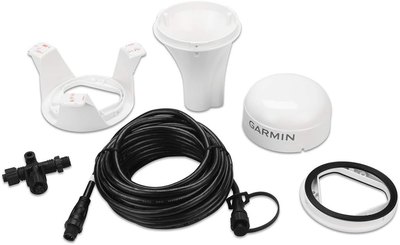
Garmin’s multi-band GNSS antennas (such as the GPS 24xd) deliver higher accuracy (often sub-meter) with multi-constellation support and higher update rates. They commonly use NMEA 2000 networking and include heading sensors in some models. These are built for demanding marine, aviation, and professional navigation environments.
Pros: Multi-band precision, robust build, excellent in obstructed or high-speed environments, integrated features on many models.
Cons: Higher cost; often requires specific networking (NMEA 2000) rather than simple SMA.
Best for: Boats, aircraft, serious navigation systems where accuracy and reliability justify the premium.
5. Bingfu Vehicle Active GPS Navigation Antenna
4.7 out of 5 ratings
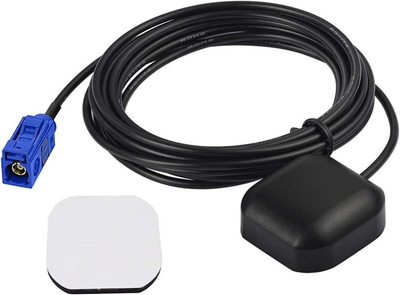
Bingfu Vehicle Active GPS Navigation Antenna Fakra C Blue. Frequency: GPS 1575.42MHz; Feature: Magnetic Mounting, Adhesive Mount; LNA Gain: 28dB; Cable Length: 3m / 10 feet; Cable Connector: Fakra C Blue Right Angle Connector; Package List: 1 x Antenna, 1 x Double-sided Adhesive Piece (As the Picture Shown)
Pros: Enables high-accuracy RTK/PPK, excellent multipath rejection on better models, multi-constellation tracking.
Cons: Larger/heavier and more expensive than consumer pucks; overkill for basic navigation.
Best for: Land surveying, precision agriculture, drone mapping, base/rover stations.
Frequently Asked Questions
Do I need an active or passive GPS antenna?
Active for almost all external or cable-run applications. Passive only if the antenna is inches from the receiver and the receiver has strong internal amplification.
What connector do I need?
Check your device’s GPS port. SMA Male is the most common for aftermarket and modules. Automotive head units often use Fakra (blue Code C) or proprietary plugs. Adapters exist but add loss.
Will a better antenna improve accuracy?
It improves signal strength, lock speed, and reliability (especially under trees, in cities, or with long cables). True accuracy gains (centimeter-level) require multi-band antennas plus RTK corrections or a high-end receiver.
How important is mounting location?
Critical. Clear sky view + metal ground plane dramatically outperforms even a high-gain antenna in a poor location.
Can I use these with multi-GNSS receivers?
Yes for basic L1 multi-GNSS support on many modern receivers. Confirm the antenna covers the frequencies your receiver uses. Full multi-band is required for advanced dual-frequency modes.
Are cheap Amazon pucks reliable?
Many (Bingfu, AEDIKO, and similar) perform well for consumer and light commercial use when the connector and power requirements match. Premium filtered or multi-band units are worth the extra cost for critical or permanent installs.
Final Recommendation
For most vehicle, tracker, and general outdoor needs, start with a Bingfu or AEDIKO active magnetic SMA antenna—they deliver excellent results at low cost. Choose the Proxicast through-hole model for permanent, high-reliability installs. Step up to Garmin multi-band or a dedicated survey antenna when accuracy requirements increase.
Always verify connector, voltage, and frequency compatibility with your specific receiver before purchasing. Proper placement with a clear sky view remains the single biggest performance factor.