The Best Food Warmers for Keeping Your Meals Hot and Fresh
Food warmers are essential kitchen tools for anyone who loves serving meals at the perfect temperature, whether you’re hosting a dinner party, running a catering business, or simply keeping family meals warm. From buffet-style warmers to portable options, these devices ensure your food stays hot, fresh, and ready to serve. After researching the latest options, analyzing user reviews, and considering features like capacity, temperature control, and ease of use, here are the five best food warmers available.
1. Best Overall: Yonopro Commercial Food Warmer 48 Qt Stainless Steel
4.6 out of 5 Ratings
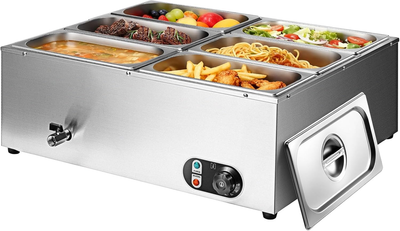
Commercial Food Warmer 48 Qt Stainless Steel Steam Table Countertop Buffet Warmer, 6-Pan 1500W Electric Bain Marie Food Warmer with Adjustable Temperature for Restaurants, Catering, Hotels
- Heavy-Duty Full Stainless Steel Construction — Built with premium stainless steel for durability, corrosion resistance, and easy cleaning. Reinforced structure withstands constant heating cycles and frequent pan changes. Sleek, professional exterior keeps its polished look even after extended use—perfect for open kitchens, buffet lines, restaurants, hotels, and catering services.
- Water Bath Heating with Auto Dry-Burn Protection — Gentle water-bath heating prevents scorching, keeps food moist and flavorful. Built-in dry-burn protection automatically stops heating when water is low. Integrated drain faucet allows quick water release and easy cleaning after daily use, ensuring worry-free, hygienic operation.
2. Premium Pick: Whalefall Countertop Food Warmer

Whalefall Countertop Food Warmer with top Holder, 27 inch Commercial Food Warming Cabinet, tri-Color Lighting, w/Thermometer and Adjustable Thermostat for Cafeteria Kitchens Restaurants
4.6 out of 5 Ratings
Whalefall Countertop Food Warmer-Temperature adjustment and display are in degrees Fahrenheit, ranging from 70°F to 185°F for different foods. Keeps food fresh for a long time. The temperature knob has a temperature display for real-time temperature monitoring. Tri-Color Lighting – This heated display case is fitted with glass on all sides and features bright, tri-color LED lighting to highlight your best pretzels, sandwiches, brownies, pastries, pies and more.
Pros: Precise temperature control, compact, durable.
Cons: Large capacity than some competitors.
Best For: Big events or home kitchens with limited counter space.
3. Editor’s Pick: NEWKITCHEN Food Warmers
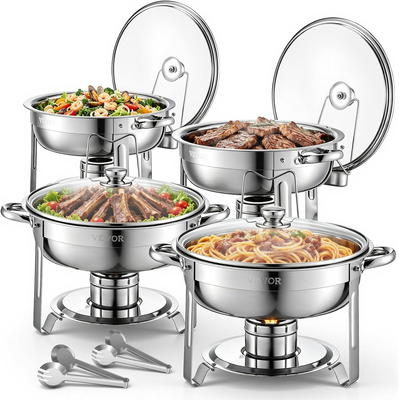
4.6 out of 5 Ratings
NEWKITCHEN Food Warmers, Food warmers for parties buffet have increased 20% more capacity, enabling the NewKitchen chafing dishes to hold more delicacies and larger portions of food. The capacity of the lower water pan has also been expanded. Whether it’s a birthday party, a wedding, a graduation ceremony or any other event with a large number of attendees, the extra-large buffet warmer allows you to prepare more food with confidence
[Safer design] We collected advice from many users on the market and found that the edges of the pots were too sharp and easy to cause scratches, so we solved this problem for you. Our catering supplies buffet display polished the metal edges into smooth arcs, so you can avoid finger cuts. At the same time, food heater tray buffet are designed with a thickened structure. Even if the plate is filled with delicious food, it will not spill over. The thoughtful design ensures that you have a safe and considerate party experience
Pros: Affordable, portable, user-friendly.
Cons: Limited capacity, basic features.
Best For: Individuals or small families needing a simple warmer.
4. Budget Pick: Chefman Electric Warming Tray

4.6 out of 5 Ratings
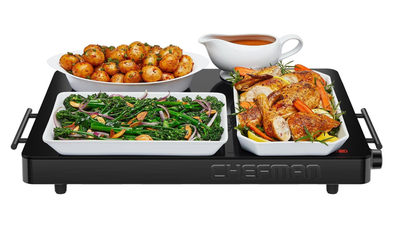
The Chefman Electric Warming Tray is a sleek, modern option for those who prefer a flat-surface warmer. With a large 21×16-inch tempered glass surface, it can accommodate multiple dishes at once, making it ideal for buffet-style setups. The adjustable temperature control (up to 165°F) ensures even heating, and the stay-cool handles make it safe to move. Its minimalist design fits seamlessly into any kitchen aesthetic, and cleanup is a breeze with a damp cloth.
Pros: Large surface area, stylish, easy to clean.
Cons: No individual trays, less precise portion control.
Best For: Large gatherings or buffet-style events.
5. Wanish Electric Food Warmer

4.7 out of 5 Ratings
Wanish Electric Food Warmer Tray with Thermostat and Full Surface Heating, Food Warming Mat with 2 Temperature Modes for Parties Buffet, Gatherings, Gold Edge, Black, Extra Long 40”x12”
Pros: Fun design, great for specific events, easy to use.
Cons: Limited to hot dogs and buns.
Best For: Casual parties or themed events.
Choosing the Right Food Warmer
When selecting a food warmer, consider your needs:
- Capacity: Larger gatherings require bigger trays or multiple compartments (e.g., Elite Gourmet or Chefman). Smaller households may prefer compact models like the Proctor Silex.
- Temperature Control: Look for adjustable settings for precise heating, especially for delicate dishes.
- Portability: If you’re taking it to events, lightweight and spill-proof designs (like Proctor Silex) are key.
- Ease of Cleaning: Removable trays or wipeable surfaces save time.
- Design: For frequent hosting, a stylish warmer like the Chefman can double as a serving centerpiece.
Final Thoughts
The best food warmer depends on your specific needs, whether it’s hosting large gatherings, keeping small meals warm, or adding flair to themed parties. The Elite Gourmet EWM-9933 offers the best balance of capacity and affordability, while the Chefman Warming Tray excels for large-scale events. For niche uses, the Nostalgia HDS200 is a fun choice. Whichever you choose, these food warmers will keep your meals hot, fresh, and ready to enjoy.
Note: Prices and availability may vary. Check retailers like Amazon or Walmart for the latest deals.
Food Warmers Buying Guide and FAQs
Food warmers keep already-cooked food at safe serving temperatures without continuing to cook it. They are essential for buffets, catering, restaurants, potlucks, and home entertaining. Proper use prevents food from entering the temperature “danger zone” (roughly 40–140°F / 4–60°C), where bacteria multiply rapidly. Most food safety guidelines require holding hot food at 135–140°F (57–60°C) or higher.
Types of Food Warmers
Food warmers fall into several main categories based on heat method, capacity, and use case:
- Countertop food warmers / Bain Maries — Compact units that hold hotel pans (often GN 1/1, 1/2, 1/3 sizes) or round inserts. Ideal for sauces, sides, soups, and smaller service volumes. Available in wet or dry heat.
- Steam tables / Buffet warmers — Larger multi-pan units common in cafeterias and buffets. They typically use a heated water bath (wet heat) for even, gentle warming of multiple dishes.
- Soup kettles / Soup warmers — Cylindrical units designed for liquids (soups, chili, stews, queso). Capacities often range from 4–20+ quarts. Many use a water-bath (bain-marie style) design to prevent scorching.
- Holding cabinets / Heated cabinets — Insulated upright or undercounter cabinets for larger batches or longer hold times. Some offer humidity control. Common in commercial kitchens and catering.
- Drawer warmers — Space-saving drawers that hold food near the cook line (great for fries, proteins, or plated items in quick-service settings).
- Heat lamps and strip warmers — Overhead infrared or radiant heat. Best for short-term holding of plated food, fries, pizza, or carving stations. They keep items crisp but can dry food if held too long.
- Warming trays / Electric mats — Flat electric surfaces (glass, silicone, or metal) popular for home use and smaller gatherings. Place existing dishes or pans directly on them.
- Chafing dishes — Traditional buffet servers using gel fuel (Sterno-style), electric bases, or induction. Highly portable; fuel versions work without electricity.
- Display / merchandising warmers and pie warmers — Glass-front cabinets for grab-and-go items like pastries, pizzas, or roasted chickens.
- Portable / battery-powered options — Cordless heated lunch boxes or insulated carriers for transport or off-grid use.
Wet heat vs. dry heat is a critical distinction:
- Wet heat (water bath or humidified) retains moisture—best for soups, sauces, gravies, rice, vegetables, and braises.
- Dry heat (direct elements, lamps, or ventilated cabinets) preserves crispness—best for fries, fried chicken, roasted potatoes, pastries, and breaded items.
Rethermalizers are a related but distinct category: they safely reheat chilled or frozen foods through the danger zone, then hold them. Standard food warmers are only for already-hot food.
Buying Guide: Key Factors to Consider
- Menu and food types — Match the heat style to your dishes. Moist foods need wet/humidified heat; crispy foods need dry heat. Mixed menus may require multiple units or dual-mode equipment.
- Capacity and workflow — Size for peak demand and refill rhythm, not just average volume. Countertop units suit low-to-medium volume; steam tables and cabinets handle high volume. Consider pan sizes (full-size, half-size, fractional) and whether you need multiple independent zones.
- Temperature control and precision — Look for accurate thermostats (better than simple rheostats/dials) that maintain consistent temperatures. Digital controls and multiple sensors improve reliability. Always verify actual food temperature with a probe thermometer—the unit’s dial is only a guide.
- Construction and certifications — Commercial units should be stainless steel (durable and easy to clean), NSF-certified for sanitation, and UL/ETL listed for electrical safety. Home units prioritize ease of cleaning and storage (e.g., roll-up silicone mats).
- Portability and power — Fuel-based chafing dishes excel outdoors or without power. Electric units need outlets (or generators). Battery models exist for personal use. Mobile carts with casters help in large venues.
- Ease of cleaning and maintenance — Removable pans/insets, smooth surfaces, and drainable wet wells simplify daily cleaning. Wet units require regular water changes and descaling.
- Energy use and features — Good insulation reduces running costs. Useful extras include lids, humidity control, timers, overheat protection, pass-through doors, and independent compartments.
- Budget — Home warming trays and mats often range from under $50 to a few hundred dollars. Basic commercial countertop units start in the low hundreds; multi-pan steam tables and quality holding cabinets run higher (mid-range $500–several thousand; premium institutional models more). Factor in ongoing costs (fuel cans vs. electricity).
Home vs. commercial tip: For occasional parties, a warming tray, electric buffet server, or set of chafing dishes is usually sufficient. High-volume restaurants and caterers need certified commercial equipment built for continuous use.
Safety and Best Practices
- Preheat the warmer and place only hot food inside.
- Keep food covered when possible to retain heat and moisture.
- Stir or rotate items periodically for even temperatures.
- Monitor with a food thermometer; discard food that falls below safe holding temperatures for too long (local rules vary; many allow limited time below 140°F under specific conditions).
- Never use a standard food warmer to reheat cold food unless it is designed as a rethermalizer.
- Clean thoroughly after each use to prevent bacterial growth.
Frequently Asked Questions
What temperature should a food warmer maintain?
Hot-held food should stay at or above 135–140°F (57–60°C). Many commercial units operate in ranges such as 86–185°F or higher; set and verify according to the food type and local health codes.
Can food warmers cook or reheat food?
Most are designed only for holding already-cooked hot food. Reheating cold or frozen items requires a rethermalizer or proper cooking equipment to pass safely through the danger zone.
Wet heat or dry heat—which do I need?
Wet for moisture-sensitive items (soups, sauces, mashed potatoes). Dry for crisp items (fries, fried foods, pastries). Some units offer both or adjustable humidity.
Do bain maries / steam tables need water?
Wet-heat models require water in the well. Dry-heat models do not. Always check the manufacturer’s instructions.
What’s the difference between a chafing dish and an electric food warmer?
Chafing dishes traditionally use fuel cans (or electric bases) and are highly portable for buffets and events. Electric food warmers (trays, steam tables, cabinets) plug in, offer more precise control, and suit permanent indoor setups. Both keep food warm but differ in power source, precision, and convenience.
How do I choose the right size?
Base it on the volume you need to hold during peak service and how quickly you can refill. Undersizing creates bottlenecks; oversizing wastes energy and space.
Are food warmers energy-efficient?
Yes—holding temperature uses far less energy than repeatedly reheating or cooking. Well-insulated units and lids improve efficiency further.
What certifications should I look for?
For commercial use: NSF (sanitation) and UL/ETL (electrical safety). Home units should at least carry basic electrical safety listings.
How long can food stay in a warmer?
Quality declines over time even at safe temperatures (texture, moisture, flavor). Aim for the shortest practical hold time. Local health codes set maximum times and temperature requirements.
Can I put any pans or dishes on a warming tray?
Use heat-safe cookware. Avoid plastic or materials not rated for the surface temperature. Glass, ceramic, stainless, and many silicone options work well on most trays/mats.
Choosing the right food warmer starts with understanding your menu, volume, space, and whether you need moisture retention or crispness. Prioritize accurate temperature control, easy cleaning, and appropriate capacity. With the correct equipment and proper monitoring, you can serve hot, safe, high-quality food throughout service. Always follow manufacturer guidelines and local food safety regulations.